
- All Resources
- Blog
- Customer Story

The Hidden Cost of Poor Product Discovery in B2B Ecommerce
Schedule MeetingYour customers are searching.
They’re just not finding — and it’s costing you revenue.
The Problem Most Ecommerce Teams Don’t See
You’ve done the hard work:
- You’re driving traffic
- Your catalog is growing
- Your ecommerce platform is live
But here’s what’s really happening behind the scenes:
- Customers search…
- They don’t find what they need…
- They leave
No complaint. No feedback. Just lost revenue.
Reality Check
If your search returns “0 results” even once — you’re losing business.
And the worst part?
You probably don’t even know how much.
Want to see how your current search is performing?
Get a Free Product Discovery Audit →
Why Your Customers Are Frustrated (Even If They Don’t Say It)
B2B buyers don’t search the way your system expects.
They don’t type:
❌ Exact product names
❌ Internal SKUs
They search like humans:
- “industrial bearings for heavy load”
- “replacement part for XYZ machine”
- “low temperature resistant material”
And your system responds with:
❌ Irrelevant results
❌ No results
❌ Confusing navigation
That moment of friction = lost trust
And frustrated buyers don’t convert. They leave.
See how Pine AI handles real-world search queries →
The Real Business Impact (Not Just UX)
This isn’t just a “search issue.”
It’s a revenue problem.
Poor product discovery leads to:
- 🔻 Lost high-intent buyers
- 🔻 Lower conversion rates
- 🔻 Reduced average order value
- 🔻 Missed upsell & cross-sell opportunities
- 🔻 Higher bounce rates
Simple Truth:
0 results = 0 revenue
See how to turn failed searches into conversions →
Why Traditional Search No Longer Works
Most ecommerce search systems were built for:
- Exact keyword matching
- Simple catalogs
- Predictable queries
But today’s B2B ecommerce is:
- Complex
- Attribute-heavy
- Intent-driven
Traditional search:
❌ Matches keywords
❌ Ignores intent
Modern buyers:
✔ Search naturally
✔ Expect guidance
✔ Want to compare before buying
Explore how modern product discovery works →
From Search to Decision: What Buyers Actually Need
Today’s buyers don’t just want results.
They want help deciding.
They need:
- Relevant product suggestions
- Smart filtering & refinement
- Product comparisons
- Clear summaries
This is where most ecommerce experiences break.
And this is exactly where Pine AI changes the game.
How Pine AI Helps You Recover Lost Revenue
Pine AI transforms your search into a guided product discovery experience.
Instead of just showing results, it helps customers:
✔ Find the right products faster
✔ Refine results intelligently
✔ Compare options
✔ Make confident purchase decisions
Example:
A B2B distributor with a large catalog:
Before:
- Customers struggled to find products
- High drop-offs after search
After improving product discovery:
- Faster product discovery
- Increased engagement
- Higher conversions
(This is the gap Pine AI helps close)
Want to see this on your own catalogue? Book a 15-min demo →
The Shift You Need to Make
This isn’t about improving search.
It’s about rethinking how customers discover products.
Old Approach:
Search → Results → Confusion → Exit
New Approach:
Search → Discovery → Comparison → Decision → Purchase
Pine AI enables this shift.
Ask Yourself:
- Can your customers easily find what they’re looking for?
- Do your search results truly match intent?
- Are you confident you’re not losing revenue here?
If you’re unsure — that’s the opportunity.
Get a Product Discovery Audit →
Turn Search Into Your Growth Engine
Your customers are already telling you what they want — through search.
The question is:
👉 Are you helping them find it?
With Pine AI, you can:
✔ Improve product discovery
✔ Increase conversions
✔ Deliver better customer experiences
✔ Unlock revenue from existing traffic
Ready to See Pine AI in Action?
See how your catalogue performs with Pine AI (15-min demo)
Get a Product Discovery Audit
Frequently Asked Questions
Why is product discovery important in B2B ecommerce?
Product discovery helps customers find the right products quickly, improving conversions and reducing drop-offs.
How does poor site search impact ecommerce revenue?
Poor search leads to zero results and irrelevant products, causing customers to leave and reducing sales.
What is the difference between search and product discovery?
Search matches keywords, while product discovery understands intent and guides customers to the right products.
How can businesses improve product discovery?
Use intelligent search, smart filters, and guided experiences to help customers find and choose products faster.
Is cloud ERP necessary for textile companies?
Cloud-first ERP ensures high availability, mobility, security, and scalability — essential for modern operations.

How a Textile Manufacturer Turned Quoting Into a Revenue Control System
Schedule Meeting td {font-size: 15px !important;
}
td p {
margin: 0 !important;
}
How Much Revenue Is Your Quoting Process Quietly Exposing?
In many textile manufacturing companies, quoting still runs on spreadsheets.It feels routine.But at the executive level, it’s strategic.Every delayed quote increases the risk of losing the order. Every manual costing adjustment exposes margin leakage. Every pricing miscalculation impacts EBITDA — often without visibility.This circular-knit textile manufacturer was experiencing:- 2–3 hours per quote
- Manual yarn, knitting, dyeing & finishing calculations
- Limited real-time margin control
- 40–50% quote conversion rates
The Strategic Decision
Rather than replacing their ERP or disrupting operations, the company implemented the iTexClouds Quoting & Costing Module — a cloud-based textile ERP solution built specifically for manufacturing environments.Deployment time: ~10 days No implementation fee No system overhaulThe objective was clear:- Protect margin
- Increase quote velocity
- Improve win rates
- Gain executive-level pricing visibility
From Operational Task to Strategic Advantage
After implementation, quoting shifted from reactive spreadsheets to automated control.✔ Customer-ready quotes generated in under 10 minutes ✔ Automated costing across yarn, knitting, dyeing & finishing ✔ Built-in margin validation before sending quotes ✔ Centralized pricing oversight ✔ Scalable quote-to-order automationInstead of relying on individual estimators, leadership gained standardized costing logic across the organization.90-Day Performance Shift
| Metric | Before | After |
| Quote Turnaround | 2–3 hours | Under 10 minutes |
| Cost Accuracy | Manual & variable | Automated & traceable |
| Quote Conversion | 40–50% | 60–70% |
| Margin Visibility | Limited | Real-time validation |
Executive-Level Business Impact
- 85% faster quoting
- 10–20% increase in order wins
- 1–2% margin protection across production
- 10x–15x monthly ROI
- System paid for itself with just two additional orders per month
Why This Matters Now
The textile industry is facing:- Raw material volatility
- Compressed margins
- Increased buyer expectations
- Faster competitive response times
- Revenue predictability
- Margin discipline
- Sales scalability without increasing headcount
- Stronger competitive positioning
The Bottom Line
Quoting is not a back-office activity.It is a revenue protection system.The iTexClouds Quoting & Costing Module transforms spreadsheet-driven pricing into controlled, automated, cloud-based textile ERP intelligence — protecting profit while accelerating growth.If Your Team Is Still Quoting Manually
Ask one question:How much margin is being exposed every month?Book a 15-minute executive pricing assessment and see how your current quoting process compares — and how quickly it can become a growth lever.Quote faster. Protect margin. Win more orders.
Scaling for Rapid Growth with iTexClouds Cloud ERP Solutions
Schedule MeetingA rapidly expanding textile manufacturer reached a critical stage of growth. Demand for their premium fabrics surged, but their existing systems couldn’t keep pace. Manual workflows, delayed reporting, and disconnected departments led to production slowdowns and limited operational visibility.
To scale efficiently without sacrificing quality, the company adopted iTexClouds Cloud ERP Solutions — a move that delivered a complete operational transformation.
Unifying Operations with Cloud ERP
Before implementing iTexClouds, the textile manufacturer managed operations through separate tools and spreadsheets. This created data gaps, miscommunication, and inconsistent planning.
The switch to Cloud ERP unified every department — weaving, dyeing, finishing, warehousing, sales, and more — into one connected, real-time platform.
Teams gained instant access to accurate data across the entire production lifecycle, improving responsiveness and coordination.
Smarter Inventory Management
Material shortages and inconsistent stock records previously disrupted production. iTexClouds’ Inventory Management module solved this by providing:
- Real-time visibility across all storage locations
- Automated reorder level alerts
- Accurate batch, lot, and roll tracking
This stabilized production, reduced waste, and ensured uninterrupted material availability.
Automated Production Planning
Textile manufacturing requires flawless coordination across multiple production stages. With iTexClouds, Production Planning became automated, intelligent, and demand-driven.
Schedulers could optimize machine usage, balance workloads, and adjust plans instantly — resulting in shorter production cycles and consistently on-time delivery.
Strengthened Supply Chain Management
iTexClouds connected suppliers, logistics partners, and internal teams into a unified digital workflow. The Supply Chain Management tools enabled:
- Predictive material planning
- Faster vendor coordination
- Early detection of potential delays
This brought stability, transparency, and resilience to the company’s supply chain.
Enhanced Quality Control
Quality assurance is essential in textile production. iTexClouds introduced automated quality checkpoints and digital inspection forms.
The Quality Control module helped teams detect defects early, maintain product consistency, and significantly reduce rework.
The Results
After implementing iTexClouds Cloud ERP Solutions, the textile manufacturer achieved:
- 40% higher operational efficiency
- 30% lower inventory carrying costs
- 98% on-time delivery performance
- 25% faster production cycles
Their growth accelerated — supported by greater precision, agility, and end-to-end visibility.
Conclusion
iTexClouds Cloud ERP Solutions empowered this textile manufacturer to convert operational challenges into long-term competitive strength. With centralized data, automated workflows, and smarter decision-making, iTexClouds became the backbone of their rapid growth journey.
Ready to Transform Your Textile Business?
Experience the ERP system built specifically for textile and apparel manufacturing.
👉 Request a Free iTexClouds ERP Demo
👉 Consult With Our Textile ERP Experts
👉 Start Your Digital Transformation Today
Grow smarter. Scale faster. Choose iTexClouds Cloud ERP.

Enhancing Customer Experience with a Next-Generation Cloud ERP Platform
Schedule Meeting A fast-growing textile manufacturer was facing rising customer expectations, tighter delivery timelines, and operations slowed by outdated systems. Manual processes, inventory inaccuracies, and production delays were making it hard to deliver a reliable customer experience.iTexClouds ERP transformed their operations from the ground up.Streamlined Operations. Stronger Customer Trust.
By shifting to the iTexClouds Cloud ERP platform, the manufacturer gained:✔ Real-Time Data Visibility Instant access to order status, material movement, and production progress improved communication and transparency.✔ Accurate Inventory Management Centralized, automated inventory controls eliminated stock mismatches and enabled faster order confirmations.✔ Smarter Production Planning Optimized schedules and reduced bottlenecks ensured consistent on-time delivery.✔ Supply Chain Optimization Better coordination with suppliers and logistics teams created more reliable delivery timelines.The Outcome
With iTexClouds ERP in place, the textile business now delivers:- Faster order processing
- Clearer customer updates
- Higher product accuracy
- A smoother, more predictable delivery experience
ERP + CRM in 2026: Driving Faster Sales & Better CX
Schedule MeetingIntroduction: A New Era of Unity and Insight
In the natural world, every element works in harmony — wind with sky, river with stone, fire with spark. In the textile industry of 2026, this harmony is found in Digital Transformation, where ERP and CRM move together as one.
For Sales & Operations executives, digital disruption is no longer a distant signal — it is the drumbeat guiding faster sales cycles, stronger forecasting, and deeper customer relationships. Today’s leaders need clarity, connection, and tools that work as a unified force.
This is where iTexClouds ERP from Infopine rises — bringing the strength of integrated ERP + CRM to textile enterprises seeking speed, accuracy, and customer delight.
1. Why Integrated ERP + CRM Is Essential in 2026
Just as no tribe thrives alone, no business system should stand in isolation. ERP and CRM are the two halves of a powerful circle:
- ERP manages production, inventory, procurement, planning.
- CRM shapes customer engagement, sales pipelines, and service touchpoints.
In 2026, integration is no longer optional. It enables:
- Unified customer and operational data
- Faster decision-making through real-time insights
- Reduced manual processes
- Seamless sales-to-operations communication
- AI-driven forecasting and automation
With integration, every department sees the same truth — removing blind spots, confusion, and delays.
2. The Top 5 Textile ERP Trends Shaping 2026 (Keywords Included)
1. Digital Transformation
This remains the textile industry’s north star. Digital Transformation means reshaping old processes, adopting cloud systems, and enabling connected data visibility.
2. AI-Powered Analytics
AI now guides sales predictions, delivery planning, churn risk analysis, and operational optimization, giving leaders strategic foresight.
3. Cloud-First ERP
Cloud systems offer flexibility, scalability, remote access, and improved data security — essential for fast-moving textile manufacturing and distribution.
4. Real-Time Decision Making
Leaders no longer wait for end-of-day reports. Instead, live dashboards show stock movement, order status, customer activity, and production progress.
5. Predictive Analytics
Predictive modeling helps forecast demand, prevent shortages, plan workforce deployment, and create accurate sales projections.
These five forces are reshaping how textile companies think, operate, and grow in 2026.
3. How iTexClouds ERP + CRM Drives Digital Transformation
iTexClouds ERP is designed with the textile industry’s unique challenges in mind — dynamic demand, raw material fluctuations, customization requirements, and tight delivery windows.
With integrated CRM, it empowers enterprises through:
A. Unified Customer View
Sales teams access customer patterns, interaction history, pricing records, and open orders — all in one place.
B. Real-Time Inventory & Production Sync
Reps can instantly check item availability, lead times, and production status, enabling faster, accurate quotation.
C. AI-Driven Forecasting
Predictive insights assist in shipment planning, sales strategy, and resource allocation.
D. Smarter Sales Execution
From follow-ups to negotiations, sales teams gain the tools to convert prospects faster.
E. Operations Optimization
Production managers view live commitments, enabling capacity planning that aligns with real demand.
This harmony between departments helps textile enterprises achieve speed, accuracy, and trust.
4. Sales & Operations Benefits of ERP + CRM Integration
✔ Faster Sales Cycles
Integrated workflows eliminate delays caused by disconnected teams.
✔ Accurate Commit Dates
With real-time stock and production data, promises made to customers match actual capability.
✔ Enhanced Customer Experience
Personalized communication, faster responses, and proactive service build loyalty.
✔ Better Forecast Accuracy
Predictive analytics create clearer demand visibility.
✔ Reduced Operational Costs
Automation cuts manual labor, errors, and inefficiencies.
In 2026, speed and accuracy are not luxuries — they are survival skills.
5. Implementation Guide for Sales & Operations Leaders
To bring ERP + CRM integration to life, leaders should:
1. Define transformation goals
Set clear objectives like reduced lead times, higher forecast accuracy, or improved customer retention.
2. Invest in Change Management
Equip teams with training and transparent migration plans.
3. Clean and Standardize Data
Good data fuels accurate forecasting and AI workflows.
4. Choose Scalable Cloud Solutions
Cloud-first systems ensure long-term flexibility and lower infrastructure cost.
5. Monitor KPIs Continuously
Track sales velocity, stock accuracy, customer satisfaction, and delivery performance.
Frequently Asked Questions
Why do textile companies need integrated ERP + CRM in 2026?
Because it unifies sales, customer data, and operations — enabling faster sales cycles, better decision-making, and enhanced customer experience.
How does integration support Digital Transformation?
It replaces manual processes with automated, real-time workflows that improve accuracy and scalability.
How does iTexClouds ERP enhance forecasting?
With AI-powered analytics and predictive modeling that help plan inventory, production, and sales.
Can ERP + CRM reduce operational costs?
Yes. Automation, real-time insights, and improved planning reduce waste, errors, and labor costs.
Is cloud ERP necessary for textile companies?
Cloud-first ERP ensures high availability, mobility, security, and scalability — essential for modern operations.
Ready to Modernize Your Textile Enterprise?
Let iTexClouds ERP help your sales and operations teams work as one.

ERP Automation: Solving 2026 Inventory Challenges
Schedule Meeting1. Understanding the Top Inventory Challenges in 2026
As the textile industry accelerates into 2026, operations leaders face two major threats:- Stockouts — missed sales, broken supplier commitments, slowed production.
- Excess Inventory — heavy carrying costs, waste, and capital tied up in unsold goods.
- Fragmented inventory systems
- Unpredictable demand
- Delayed supplier communication
- Limited transparency across plants/warehouses
2. Why ERP Is the Core of Inventory Stability
iTexClouds ERP from Infopine integrates the entire ecosystem:- Live stock levels
- Sync with production schedules
- Supplier lead-time tracking
- Compliance and AEO requirements
- Centralized analytics
3. Real-Time Inventory: Seeing the Present as It Truly Is
Real-time visibility allows leaders to:- Detect shortages instantly
- Identify aging or slow-moving stock
- Manage SKUs across multiple facilities
- Reduce emergency procurement
4. Predictive Analytics in Textile ERP: Wisdom Before Action
Predictive analytics in iTexClouds ERP examines:- Seasonal demand
- Buyer behavior
- Supplier reliability
- Production trends
5. AI Automation: The Digital Keeper That Never Sleeps
Automation helps by:- Recommending optimal reorder quantities
- Triggering alerts early
- Auto-adjusting safety stock
- Balancing inventory across locations
6. Supply Chain Visibility: Seeing the Whole Circle of Movement
With unified visibility, leaders track:- Shipment delays
- Supplier performance
- Warehouse transfers
- Production bottlenecks
7. Demand Forecasting: Reading the Winds of Market Change
Forecasting accuracy helps leaders:- Plan production
- Schedule procurement
- Reduce waste
- Adjust to fashion cycles
8. Operational Efficiency: The Sacred Balance Between Too Much and Too Little
When ERP automation is woven into operations:- Inventory levels stay healthy
- Carrying costs decrease
- Lead times shorten
- Planning becomes proactive
- Teams collaborate more effectively
Frequently Asked Questions
What is AEO and why is it important for textile operations?
AEO (Authorized Economic Operator) enhances cross-border trust and ensures smoother customs flow, reducing delays that often cause stockouts.How does ERP support AEO compliance?
iTexClouds ERP provides:- Shipment traceability
- Audit-ready documentation
- Digitized compliance logs
- Supplier verification tracking
Can ERP automation reduce customs-related stockouts?
Yes. Automated alerts help anticipate clearance delays and adjust replenishment plans.Does predictive analytics replace planners?
No — it enhances human judgment by presenting deeper data insights.How soon can AEO benefits be realized after ERP integration?
Many organizations notice smoother shipments and fewer bottlenecks within the first few cycles of usage.Closing Message
May your inventory flow like a steady river — balanced, visible, and life-giving.
With iTexClouds ERP from Infopine, leaders walk the path of clarity, efficiency, and harmony across their entire supply chain. Book A Demo Now.
ERP Modernization in 2026: Why Strategic Replacement Beats Costly Upgrades
Schedule Meeting td { font-size: 15px !important; } td p { margin: 0 !important; }Introduction: ERP Modernization Is a Business-Critical Decision
In 2026, ERP modernization is no longer about maintaining systems—it is about enabling sustainable growth, operational clarity, and long-term resilience. Organizations that continue relying on incremental ERP upgrades are increasingly constrained by aging architectures, rising complexity, and limited innovation.
The strategic question has shifted from “How do we upgrade?” to “Is upgrading still worth it?” More enterprises are discovering that strategic ERP replacement delivers stronger value, faster outcomes, and lower long-term risk than repeatedly upgrading legacy platforms.
This blog explains why replacement is becoming the preferred path forward and how iTexClouds ERP, an Infopine product, supports modern ERP transformation with confidence.
The Hidden Cost of Legacy ERP Upgrades
Upgrading an existing ERP system often seems practical because it avoids immediate disruption. However, upgrades frequently extend structural problems instead of solving them.
Common limitations of upgrades
- Accumulating technical debt: Customizations and workarounds grow more complex with every upgrade cycle
- Rising total cost of ownership: Ongoing licensing, testing, and external support steadily increase expenses
- Innovation bottlenecks: New capabilities are difficult to adopt on outdated platforms
- System fragility: More integrations and patches create greater failure points
Instead of simplifying operations, repeated upgrades often make ERP environments harder to manage and slower to evolve.
Strategic ERP Replacement: Built for the Future
Strategic replacement focuses on establishing a modern ERP foundation rather than preserving outdated structures. It is a deliberate transition to a platform designed for current and future business needs.
What sets replacement apart
- Cloud-native architecture that scales with demand
- Standardized best-practice processes that reduce customization
- Continuous delivery of innovation without disruptive upgrade projects
- Simplified system landscapes that reduce operational complexity
This approach supports long-term digital transformation by aligning ERP capabilities with business strategy instead of legacy constraints.
Upgrade vs. Replace: A Long-Term Value Comparison
When evaluated over several years, the difference between upgrading and replacing becomes clear.
Dimension | ERP Upgrade | Strategic Replacement |
Initial investment | Lower | Moderate |
Long-term cost predictability | Low | High |
System complexity | Increases | Decreases |
Innovation readiness | Limited | Built-in |
Time-to-value | Gradual | Accelerated |
Short-term savings from upgrades often disappear over time, while replacement delivers more consistent value and operational stability.
Cloud ERP Is the Modern Standard
Today’s leading ERP platforms are designed as cloud ERP systems from the ground up—not adapted from on-premise software.
Key advantages include:
- Elastic scalability to support changing business volumes
- Automatic updates that remove the need for major upgrade projects
- Modern security frameworks aligned with current compliance standards
- Seamless integration across enterprise applications
Cloud-native ERP environments reduce infrastructure burden and make it easier to adopt new capabilities as business needs evolve.
AI-Powered ERP: From Insight to Foresight
One of the strongest drivers of ERP modernization in 2026 is the rise of AI-powered ERP. These systems transform ERP from a system of record into a system of intelligence.
Capabilities unlocked by AI-driven ERP
- Predictive forecasting across finance and operations
- Automated reconciliations and exception handling
- Real-time alerts for risks and performance deviations
- Continuous process improvement through pattern analysis
Legacy systems struggle to support these capabilities due to outdated data structures and processing limits. Strategic replacement enables AI features as part of the core platform.
When ERP Replacement Makes Sense
Organizations should strongly consider legacy system replacement when they experience:
- ERP platforms approaching end-of-support
- Heavy dependence on custom code and spreadsheets
- Frequent integration failures during updates
- Delayed access to real-time operational data
- Limited ability to adopt automation or analytics
These signals indicate that further upgrades are unlikely to deliver meaningful improvement.
How iTexClouds ERP Enables Modernization
iTexClouds ERP, developed by Infopine, is designed to help organizations modernize ERP without unnecessary risk or disruption.
Key strengths
- Modular cloud-native architecture enabling phased adoption
- Preconfigured industry workflows that shorten implementation time
- Embedded analytics and AI across core business processes
- Migration accelerators and governance tools to protect data accuracy
This approach balances flexibility with control, allowing organizations to modernize at a sustainable pace.
A Practical ERP Modernization Roadmap
Successful strategic replacement typically follows a structured approach:
- Define business outcomes and modernization goals
- Compare long-term costs and benefits of upgrade vs. replacement
- Prepare data foundations for migration
- Deploy in phases to deliver early value
- Enable users and refine processes continuously
Many organizations begin realizing measurable benefits within 90–180 days.
Strategic Questions to Guide the Decision
Before committing to another upgrade, leadership teams should consider:
- Does the current ERP system support faster, smarter decisions?
- Are resources focused on innovation or system maintenance?
- Can the platform support AI, automation, and growth?
- What is the long-term cost of delaying modernization?
Clear answers to these questions often reveal whether replacement is the more strategic choice.
Call to Action
ERP decisions made in 2026 will define operational capability for years to come. Avoid extending the limitations of legacy systems through costly upgrades.
👉 Schedule ERP Strategy Call to evaluate whether strategic ERP replacement with iTexClouds ERP is the right path forward.
Frequently Asked Questions
Is ERP replacement more disruptive than upgrading?
With a phased strategy, replacement can be less disruptive by eliminating repeated upgrade cycles and system instability.
How long does ERP replacement take?
Value can often be realized within 3–6 months, with additional capabilities rolled out over time.
Can existing processes be retained?
Yes. Modern ERP platforms support configuration and extensions without heavy customization.
How does cloud ERP improve system reliability?
Cloud-native platforms offer built-in redundancy, automated updates, and stronger security controls.
What is the biggest advantage of ERP modernization in 2026?
The ability to combine operational efficiency with intelligent, data-driven decision-making.
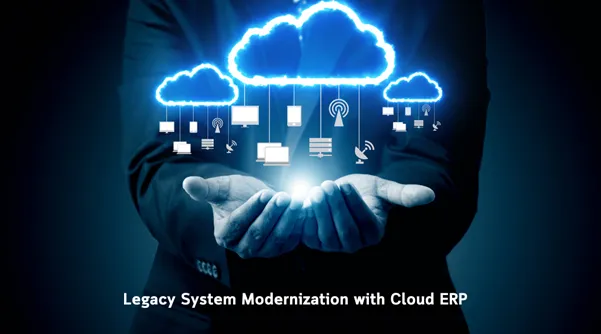
Legacy System Modernization with Cloud ERP Solutions by iTexClouds
Schedule MeetingClient Background
A fast-growing enterprise with decades-old operational platforms was struggling to keep pace with today’s business demands. Their legacy systems were rigid, expensive to maintain, and unable to deliver real-time insights. Manual workarounds slowed teams down, reporting lacked accuracy, and scaling the business had become a challenge rather than an opportunity.That’s when they partnered with iTexClouds to reimagine their core operations.The Challenge
The client faced several roadblocks:- Disconnected legacy applications causing data silos
- High maintenance costs and limited system flexibility
- Slow reporting with no intelligent insights
- Complex upgrades that disrupted daily operations
The iTexClouds Approach
iTexClouds began with a deep assessment of existing workflows, technical debt, and business goals. The modernization roadmap focused on replacing outdated infrastructure with a scalable Cloud ERP platform while preserving mission-critical processes.Key steps included:- Seamless data migration from legacy databases to a modern cloud architecture
- End-to-end ERP integration with finance, supply chain, HR, and CRM systems
- Embedding AI-driven analytics to deliver real-time insights and predictive reporting
- Designing a flexible, future-ready solution that supports continuous innovation
The Results
The transformation delivered measurable impact within months:- Faster decision-making powered by intelligent dashboards and real-time data
- Reduced operational costs through automation and cloud scalability
- Improved cross-team collaboration with a single source of truth
- Enhanced system agility, enabling rapid response to market changes
Business Impact
By modernizing their legacy environment with a cloud-first ERP strategy, the client unlocked long-term value. Teams shifted focus from system maintenance to innovation, leadership gained clarity through advanced insights, and the organization established a strong foundation for growth.Why iTexClouds
iTexClouds brings deep expertise in legacy modernization, cloud platforms, and enterprise transformation. Their consultative approach ensures that technology aligns with business outcomes—today and tomorrow.This success story proves that with the right partner, legacy systems don’t have to hold you back—they can become the launchpad for what’s next.
Is Your ERP Slowing Growth in 2026? Clear Signs It’s Time for a Smarter Cloud ERP
Schedule Meeting Growth in the textile industry no longer depends only on production capacity or market demand. In 2026, growth depends on how fast your business can see, decide, and act. At the center of that ability sits one critical system — your ERP.Many textile businesses believe their ERP is “working fine” simply because it still runs. But behind the scenes, outdated systems often slow decision-making, increase operational risk, and quietly limit scalability. Over time, these limitations add up, holding businesses back while more agile competitors move ahead.If your organization is struggling with visibility, inventory accuracy, supply chain coordination, or production planning, your ERP may be the real barrier to growth.This article explains the clear signs your ERP is slowing growth and why moving to a smarter cloud ERP, built with textile ERP, inventory management ERP, supply chain management ERP, and production planning ERP capabilities, is essential for sustainable success in 2026 and beyond.Why ERP Performance Matters More Than Ever in 2026
Textile operations are complex by nature. From sourcing raw materials to managing multi-stage production and delivering finished goods, every process is tightly connected. When ERP systems cannot keep pace with this complexity, teams are forced to rely on manual workarounds, disconnected tools, and delayed reporting.This leads to:- Limited real-time insight
- Inconsistent data across departments
- Slower response to demand changes
- Higher operational costs
Five Warning Signs Your ERP Is Slowing Growth
Decision-Making Is Based on Delayed Data
If your leadership team waits hours or days for reports, decisions are already late. Textile businesses need immediate visibility into inventory levels, production status, and order fulfillment.A modern cloud ERP delivers real-time dashboards that unify data across departments. This allows leaders to respond quickly to market shifts instead of reacting after problems appear.Inventory Problems Never Seem to End
Excess inventory and frequent stock shortages are common symptoms of weak inventory management ERP functionality.Textile inventory requires precise tracking of fabrics, colors, sizes, and dye lots. When systems lack this depth, businesses tie up working capital in excess stock or lose revenue due to unavailable materials.A textile-focused ERP aligns inventory with actual demand and production plans, improving turnover and cash flow.Supply Chain Visibility Is Limited
When supply chain disruptions feel unpredictable, the issue is often system visibility — not supplier performance.A strong supply chain management ERP connects purchasing, vendors, logistics, and production into a single system. It provides early warnings about delays, material shortages, and capacity constraints, enabling proactive planning instead of last-minute firefighting.Production Planning Is Rigid or Manual
Textile manufacturing requires flexibility. Design changes, rush orders, and shifting priorities demand fast schedule adjustments.Legacy systems rely heavily on spreadsheets or static plans. A modern production planning ERP automates scheduling, balances capacity, and adjusts workflows in real time — reducing downtime, rework, and missed deadlines.Your ERP Supports Operations but Not Growth
An ERP should do more than manage daily tasks. If your system cannot scale with new product lines, integrate with modern sales channels, or provide actionable analytics, it becomes a limitation.In 2026, ERP systems must support expansion, innovation, and strategic planning — not just routine operations.Why Cloud ERP Is the Foundation for Future Growth
A cloud ERP platform is designed for flexibility and long-term scalability. Unlike traditional systems, it adapts as your business grows and market conditions change.Key advantages include:- Scalable architecture without heavy infrastructure costs
- Secure, anywhere access for distributed teams
- Faster updates with new features and analytics
- Lower total cost of ownership
The Value of a Textile-Focused ERP Approach
Generic ERP systems rarely meet the unique demands of textile operations. A true textile ERP is built around industry-specific workflows and challenges.Key benefits include:- Fabric- and dye-lot-level inventory tracking
- Integrated production and demand planning
- End-to-end supply chain visibility
- Reduced manual errors and data duplication
How iTexClouds Supports Smarter ERP Transformation
Technology alone does not drive results — implementation and industry expertise matter.iTexClouds specializes in helping textile businesses modernize operations through cloud ERP solutions designed specifically for textile workflows. By aligning ERP capabilities with real operational needs, iTexClouds enables businesses to move from reactive management to proactive control.Their approach focuses on:- Textile-specific ERP configuration
- Seamless migration from legacy systems
- Faster user adoption with minimal disruption
- Scalable solutions that support long-term growth
Frequently Asked Questions
What are the signs that an ERP system is slowing growth in 2026?
An ERP system is slowing growth if it lacks real-time visibility, relies on manual reporting, causes inventory inaccuracies, delays production planning, or cannot scale with business expansion.Why is cloud ERP important for textile businesses?
Cloud ERP provides real-time data access, supports complex textile workflows, improves collaboration across the supply chain, and scales easily as demand changes.How does a textile-specific ERP improve inventory management?
A textile-specific ERP tracks inventory by fabric type, color, size, and dye lot, improving accuracy, reducing excess stock, and preventing material shortages.Can cloud ERP improve production planning?
Yes. Cloud ERP automates scheduling, optimizes capacity, and adjusts production plans in real time based on demand or material availability.When should a textile business upgrade its ERP system?
A textile business should upgrade when outdated technology limits visibility, data is fragmented, reporting is slow, or the system cannot support modern inventory, supply chain, and production planning needs.Final Call to Action
If your ERP is slowing decisions instead of enabling growth, 2026 is the right time to change direction.👉 Connect with iTexClouds for a free ERP readiness assessment. Discover how a smarter cloud ERP can improve visibility, streamline production, and create a strong foundation for sustainable growth.Don’t let outdated systems define your future. Build a smarter textile operation today.
- All Resources
- Blog
- Customer Story
The Hidden Cost of Poor Product Discovery in B2B Ecommerce
Schedule MeetingYour customers are searching.
They’re just not finding — and it’s costing you revenue.
The Problem Most Ecommerce Teams Don’t See
You’ve done the hard work:
- You’re driving traffic
- Your catalog is growing
- Your ecommerce platform is live
But here’s what’s really happening behind the scenes:
- Customers search…
- They don’t find what they need…
- They leave
No complaint. No feedback. Just lost revenue.
Reality Check
If your search returns “0 results” even once — you’re losing business.
And the worst part?
You probably don’t even know how much.
Want to see how your current search is performing?
Get a Free Product Discovery Audit →
Why Your Customers Are Frustrated (Even If They Don’t Say It)
B2B buyers don’t search the way your system expects.
They don’t type:
❌ Exact product names
❌ Internal SKUs
They search like humans:
- “industrial bearings for heavy load”
- “replacement part for XYZ machine”
- “low temperature resistant material”
And your system responds with:
❌ Irrelevant results
❌ No results
❌ Confusing navigation
That moment of friction = lost trust
And frustrated buyers don’t convert. They leave.
See how Pine AI handles real-world search queries →
The Real Business Impact (Not Just UX)
This isn’t just a “search issue.”
It’s a revenue problem.
Poor product discovery leads to:
- 🔻 Lost high-intent buyers
- 🔻 Lower conversion rates
- 🔻 Reduced average order value
- 🔻 Missed upsell & cross-sell opportunities
- 🔻 Higher bounce rates
Simple Truth:
0 results = 0 revenue
See how to turn failed searches into conversions →
Why Traditional Search No Longer Works
Most ecommerce search systems were built for:
- Exact keyword matching
- Simple catalogs
- Predictable queries
But today’s B2B ecommerce is:
- Complex
- Attribute-heavy
- Intent-driven
Traditional search:
❌ Matches keywords
❌ Ignores intent
Modern buyers:
✔ Search naturally
✔ Expect guidance
✔ Want to compare before buying
Explore how modern product discovery works →
From Search to Decision: What Buyers Actually Need
Today’s buyers don’t just want results.
They want help deciding.
They need:
- Relevant product suggestions
- Smart filtering & refinement
- Product comparisons
- Clear summaries
This is where most ecommerce experiences break.
And this is exactly where Pine AI changes the game.
How Pine AI Helps You Recover Lost Revenue
Pine AI transforms your search into a guided product discovery experience.
Instead of just showing results, it helps customers:
✔ Find the right products faster
✔ Refine results intelligently
✔ Compare options
✔ Make confident purchase decisions
Example:
A B2B distributor with a large catalog:
Before:
- Customers struggled to find products
- High drop-offs after search
After improving product discovery:
- Faster product discovery
- Increased engagement
- Higher conversions
(This is the gap Pine AI helps close)
Want to see this on your own catalogue? Book a 15-min demo →
The Shift You Need to Make
This isn’t about improving search.
It’s about rethinking how customers discover products.
Old Approach:
Search → Results → Confusion → Exit
New Approach:
Search → Discovery → Comparison → Decision → Purchase
Pine AI enables this shift.
Ask Yourself:
- Can your customers easily find what they’re looking for?
- Do your search results truly match intent?
- Are you confident you’re not losing revenue here?
If you’re unsure — that’s the opportunity.
Get a Product Discovery Audit →
Turn Search Into Your Growth Engine
Your customers are already telling you what they want — through search.
The question is:
👉 Are you helping them find it?
With Pine AI, you can:
✔ Improve product discovery
✔ Increase conversions
✔ Deliver better customer experiences
✔ Unlock revenue from existing traffic
Ready to See Pine AI in Action?
See how your catalogue performs with Pine AI (15-min demo)
Get a Product Discovery Audit
Frequently Asked Questions
Why is product discovery important in B2B ecommerce?
Product discovery helps customers find the right products quickly, improving conversions and reducing drop-offs.
How does poor site search impact ecommerce revenue?
Poor search leads to zero results and irrelevant products, causing customers to leave and reducing sales.
What is the difference between search and product discovery?
Search matches keywords, while product discovery understands intent and guides customers to the right products.
How can businesses improve product discovery?
Use intelligent search, smart filters, and guided experiences to help customers find and choose products faster.
Is cloud ERP necessary for textile companies?
Cloud-first ERP ensures high availability, mobility, security, and scalability — essential for modern operations.
How a Textile Manufacturer Turned Quoting Into a Revenue Control System
Schedule Meeting td {font-size: 15px !important;
}
td p {
margin: 0 !important;
}
How Much Revenue Is Your Quoting Process Quietly Exposing?
In many textile manufacturing companies, quoting still runs on spreadsheets.It feels routine.But at the executive level, it’s strategic.Every delayed quote increases the risk of losing the order. Every manual costing adjustment exposes margin leakage. Every pricing miscalculation impacts EBITDA — often without visibility.This circular-knit textile manufacturer was experiencing:- 2–3 hours per quote
- Manual yarn, knitting, dyeing & finishing calculations
- Limited real-time margin control
- 40–50% quote conversion rates
The Strategic Decision
Rather than replacing their ERP or disrupting operations, the company implemented the iTexClouds Quoting & Costing Module — a cloud-based textile ERP solution built specifically for manufacturing environments.Deployment time: ~10 days No implementation fee No system overhaulThe objective was clear:- Protect margin
- Increase quote velocity
- Improve win rates
- Gain executive-level pricing visibility
From Operational Task to Strategic Advantage
After implementation, quoting shifted from reactive spreadsheets to automated control.✔ Customer-ready quotes generated in under 10 minutes ✔ Automated costing across yarn, knitting, dyeing & finishing ✔ Built-in margin validation before sending quotes ✔ Centralized pricing oversight ✔ Scalable quote-to-order automationInstead of relying on individual estimators, leadership gained standardized costing logic across the organization.90-Day Performance Shift
| Metric | Before | After |
| Quote Turnaround | 2–3 hours | Under 10 minutes |
| Cost Accuracy | Manual & variable | Automated & traceable |
| Quote Conversion | 40–50% | 60–70% |
| Margin Visibility | Limited | Real-time validation |
Executive-Level Business Impact
- 85% faster quoting
- 10–20% increase in order wins
- 1–2% margin protection across production
- 10x–15x monthly ROI
- System paid for itself with just two additional orders per month
Why This Matters Now
The textile industry is facing:- Raw material volatility
- Compressed margins
- Increased buyer expectations
- Faster competitive response times
- Revenue predictability
- Margin discipline
- Sales scalability without increasing headcount
- Stronger competitive positioning
The Bottom Line
Quoting is not a back-office activity.It is a revenue protection system.The iTexClouds Quoting & Costing Module transforms spreadsheet-driven pricing into controlled, automated, cloud-based textile ERP intelligence — protecting profit while accelerating growth.If Your Team Is Still Quoting Manually
Ask one question:How much margin is being exposed every month?Book a 15-minute executive pricing assessment and see how your current quoting process compares — and how quickly it can become a growth lever.Quote faster. Protect margin. Win more orders.Scaling for Rapid Growth with iTexClouds Cloud ERP Solutions
Schedule MeetingA rapidly expanding textile manufacturer reached a critical stage of growth. Demand for their premium fabrics surged, but their existing systems couldn’t keep pace. Manual workflows, delayed reporting, and disconnected departments led to production slowdowns and limited operational visibility.
To scale efficiently without sacrificing quality, the company adopted iTexClouds Cloud ERP Solutions — a move that delivered a complete operational transformation.
Unifying Operations with Cloud ERP
Before implementing iTexClouds, the textile manufacturer managed operations through separate tools and spreadsheets. This created data gaps, miscommunication, and inconsistent planning.
The switch to Cloud ERP unified every department — weaving, dyeing, finishing, warehousing, sales, and more — into one connected, real-time platform.
Teams gained instant access to accurate data across the entire production lifecycle, improving responsiveness and coordination.
Smarter Inventory Management
Material shortages and inconsistent stock records previously disrupted production. iTexClouds’ Inventory Management module solved this by providing:
- Real-time visibility across all storage locations
- Automated reorder level alerts
- Accurate batch, lot, and roll tracking
This stabilized production, reduced waste, and ensured uninterrupted material availability.
Automated Production Planning
Textile manufacturing requires flawless coordination across multiple production stages. With iTexClouds, Production Planning became automated, intelligent, and demand-driven.
Schedulers could optimize machine usage, balance workloads, and adjust plans instantly — resulting in shorter production cycles and consistently on-time delivery.
Strengthened Supply Chain Management
iTexClouds connected suppliers, logistics partners, and internal teams into a unified digital workflow. The Supply Chain Management tools enabled:
- Predictive material planning
- Faster vendor coordination
- Early detection of potential delays
This brought stability, transparency, and resilience to the company’s supply chain.
Enhanced Quality Control
Quality assurance is essential in textile production. iTexClouds introduced automated quality checkpoints and digital inspection forms.
The Quality Control module helped teams detect defects early, maintain product consistency, and significantly reduce rework.
The Results
After implementing iTexClouds Cloud ERP Solutions, the textile manufacturer achieved:
- 40% higher operational efficiency
- 30% lower inventory carrying costs
- 98% on-time delivery performance
- 25% faster production cycles
Their growth accelerated — supported by greater precision, agility, and end-to-end visibility.
Conclusion
iTexClouds Cloud ERP Solutions empowered this textile manufacturer to convert operational challenges into long-term competitive strength. With centralized data, automated workflows, and smarter decision-making, iTexClouds became the backbone of their rapid growth journey.
Ready to Transform Your Textile Business?
Experience the ERP system built specifically for textile and apparel manufacturing.
👉 Request a Free iTexClouds ERP Demo
👉 Consult With Our Textile ERP Experts
👉 Start Your Digital Transformation Today
Grow smarter. Scale faster. Choose iTexClouds Cloud ERP.
Enhancing Customer Experience with a Next-Generation Cloud ERP Platform
Schedule Meeting A fast-growing textile manufacturer was facing rising customer expectations, tighter delivery timelines, and operations slowed by outdated systems. Manual processes, inventory inaccuracies, and production delays were making it hard to deliver a reliable customer experience.iTexClouds ERP transformed their operations from the ground up.Streamlined Operations. Stronger Customer Trust.
By shifting to the iTexClouds Cloud ERP platform, the manufacturer gained:✔ Real-Time Data Visibility Instant access to order status, material movement, and production progress improved communication and transparency.✔ Accurate Inventory Management Centralized, automated inventory controls eliminated stock mismatches and enabled faster order confirmations.✔ Smarter Production Planning Optimized schedules and reduced bottlenecks ensured consistent on-time delivery.✔ Supply Chain Optimization Better coordination with suppliers and logistics teams created more reliable delivery timelines.The Outcome
With iTexClouds ERP in place, the textile business now delivers:- Faster order processing
- Clearer customer updates
- Higher product accuracy
- A smoother, more predictable delivery experience
ERP + CRM in 2026: Driving Faster Sales & Better CX
Schedule MeetingIntroduction: A New Era of Unity and Insight
In the natural world, every element works in harmony — wind with sky, river with stone, fire with spark. In the textile industry of 2026, this harmony is found in Digital Transformation, where ERP and CRM move together as one.
For Sales & Operations executives, digital disruption is no longer a distant signal — it is the drumbeat guiding faster sales cycles, stronger forecasting, and deeper customer relationships. Today’s leaders need clarity, connection, and tools that work as a unified force.
This is where iTexClouds ERP from Infopine rises — bringing the strength of integrated ERP + CRM to textile enterprises seeking speed, accuracy, and customer delight.
1. Why Integrated ERP + CRM Is Essential in 2026
Just as no tribe thrives alone, no business system should stand in isolation. ERP and CRM are the two halves of a powerful circle:
- ERP manages production, inventory, procurement, planning.
- CRM shapes customer engagement, sales pipelines, and service touchpoints.
In 2026, integration is no longer optional. It enables:
- Unified customer and operational data
- Faster decision-making through real-time insights
- Reduced manual processes
- Seamless sales-to-operations communication
- AI-driven forecasting and automation
With integration, every department sees the same truth — removing blind spots, confusion, and delays.
2. The Top 5 Textile ERP Trends Shaping 2026 (Keywords Included)
1. Digital Transformation
This remains the textile industry’s north star. Digital Transformation means reshaping old processes, adopting cloud systems, and enabling connected data visibility.
2. AI-Powered Analytics
AI now guides sales predictions, delivery planning, churn risk analysis, and operational optimization, giving leaders strategic foresight.
3. Cloud-First ERP
Cloud systems offer flexibility, scalability, remote access, and improved data security — essential for fast-moving textile manufacturing and distribution.
4. Real-Time Decision Making
Leaders no longer wait for end-of-day reports. Instead, live dashboards show stock movement, order status, customer activity, and production progress.
5. Predictive Analytics
Predictive modeling helps forecast demand, prevent shortages, plan workforce deployment, and create accurate sales projections.
These five forces are reshaping how textile companies think, operate, and grow in 2026.
3. How iTexClouds ERP + CRM Drives Digital Transformation
iTexClouds ERP is designed with the textile industry’s unique challenges in mind — dynamic demand, raw material fluctuations, customization requirements, and tight delivery windows.
With integrated CRM, it empowers enterprises through:
A. Unified Customer View
Sales teams access customer patterns, interaction history, pricing records, and open orders — all in one place.
B. Real-Time Inventory & Production Sync
Reps can instantly check item availability, lead times, and production status, enabling faster, accurate quotation.
C. AI-Driven Forecasting
Predictive insights assist in shipment planning, sales strategy, and resource allocation.
D. Smarter Sales Execution
From follow-ups to negotiations, sales teams gain the tools to convert prospects faster.
E. Operations Optimization
Production managers view live commitments, enabling capacity planning that aligns with real demand.
This harmony between departments helps textile enterprises achieve speed, accuracy, and trust.
4. Sales & Operations Benefits of ERP + CRM Integration
✔ Faster Sales Cycles
Integrated workflows eliminate delays caused by disconnected teams.
✔ Accurate Commit Dates
With real-time stock and production data, promises made to customers match actual capability.
✔ Enhanced Customer Experience
Personalized communication, faster responses, and proactive service build loyalty.
✔ Better Forecast Accuracy
Predictive analytics create clearer demand visibility.
✔ Reduced Operational Costs
Automation cuts manual labor, errors, and inefficiencies.
In 2026, speed and accuracy are not luxuries — they are survival skills.
5. Implementation Guide for Sales & Operations Leaders
To bring ERP + CRM integration to life, leaders should:
1. Define transformation goals
Set clear objectives like reduced lead times, higher forecast accuracy, or improved customer retention.
2. Invest in Change Management
Equip teams with training and transparent migration plans.
3. Clean and Standardize Data
Good data fuels accurate forecasting and AI workflows.
4. Choose Scalable Cloud Solutions
Cloud-first systems ensure long-term flexibility and lower infrastructure cost.
5. Monitor KPIs Continuously
Track sales velocity, stock accuracy, customer satisfaction, and delivery performance.
Frequently Asked Questions
Why do textile companies need integrated ERP + CRM in 2026?
Because it unifies sales, customer data, and operations — enabling faster sales cycles, better decision-making, and enhanced customer experience.
How does integration support Digital Transformation?
It replaces manual processes with automated, real-time workflows that improve accuracy and scalability.
How does iTexClouds ERP enhance forecasting?
With AI-powered analytics and predictive modeling that help plan inventory, production, and sales.
Can ERP + CRM reduce operational costs?
Yes. Automation, real-time insights, and improved planning reduce waste, errors, and labor costs.
Is cloud ERP necessary for textile companies?
Cloud-first ERP ensures high availability, mobility, security, and scalability — essential for modern operations.
Ready to Modernize Your Textile Enterprise?
Let iTexClouds ERP help your sales and operations teams work as one.
ERP Automation: Solving 2026 Inventory Challenges
Schedule Meeting1. Understanding the Top Inventory Challenges in 2026
As the textile industry accelerates into 2026, operations leaders face two major threats:- Stockouts — missed sales, broken supplier commitments, slowed production.
- Excess Inventory — heavy carrying costs, waste, and capital tied up in unsold goods.
- Fragmented inventory systems
- Unpredictable demand
- Delayed supplier communication
- Limited transparency across plants/warehouses
2. Why ERP Is the Core of Inventory Stability
iTexClouds ERP from Infopine integrates the entire ecosystem:- Live stock levels
- Sync with production schedules
- Supplier lead-time tracking
- Compliance and AEO requirements
- Centralized analytics
3. Real-Time Inventory: Seeing the Present as It Truly Is
Real-time visibility allows leaders to:- Detect shortages instantly
- Identify aging or slow-moving stock
- Manage SKUs across multiple facilities
- Reduce emergency procurement
4. Predictive Analytics in Textile ERP: Wisdom Before Action
Predictive analytics in iTexClouds ERP examines:- Seasonal demand
- Buyer behavior
- Supplier reliability
- Production trends
5. AI Automation: The Digital Keeper That Never Sleeps
Automation helps by:- Recommending optimal reorder quantities
- Triggering alerts early
- Auto-adjusting safety stock
- Balancing inventory across locations
6. Supply Chain Visibility: Seeing the Whole Circle of Movement
With unified visibility, leaders track:- Shipment delays
- Supplier performance
- Warehouse transfers
- Production bottlenecks
7. Demand Forecasting: Reading the Winds of Market Change
Forecasting accuracy helps leaders:- Plan production
- Schedule procurement
- Reduce waste
- Adjust to fashion cycles
8. Operational Efficiency: The Sacred Balance Between Too Much and Too Little
When ERP automation is woven into operations:- Inventory levels stay healthy
- Carrying costs decrease
- Lead times shorten
- Planning becomes proactive
- Teams collaborate more effectively
Frequently Asked Questions
What is AEO and why is it important for textile operations?
AEO (Authorized Economic Operator) enhances cross-border trust and ensures smoother customs flow, reducing delays that often cause stockouts.How does ERP support AEO compliance?
iTexClouds ERP provides:- Shipment traceability
- Audit-ready documentation
- Digitized compliance logs
- Supplier verification tracking
Can ERP automation reduce customs-related stockouts?
Yes. Automated alerts help anticipate clearance delays and adjust replenishment plans.Does predictive analytics replace planners?
No — it enhances human judgment by presenting deeper data insights.How soon can AEO benefits be realized after ERP integration?
Many organizations notice smoother shipments and fewer bottlenecks within the first few cycles of usage.Closing Message
May your inventory flow like a steady river — balanced, visible, and life-giving.
With iTexClouds ERP from Infopine, leaders walk the path of clarity, efficiency, and harmony across their entire supply chain. Book A Demo Now.ERP Modernization in 2026: Why Strategic Replacement Beats Costly Upgrades
Schedule Meeting td { font-size: 15px !important; } td p { margin: 0 !important; }Introduction: ERP Modernization Is a Business-Critical Decision
In 2026, ERP modernization is no longer about maintaining systems—it is about enabling sustainable growth, operational clarity, and long-term resilience. Organizations that continue relying on incremental ERP upgrades are increasingly constrained by aging architectures, rising complexity, and limited innovation.
The strategic question has shifted from “How do we upgrade?” to “Is upgrading still worth it?” More enterprises are discovering that strategic ERP replacement delivers stronger value, faster outcomes, and lower long-term risk than repeatedly upgrading legacy platforms.
This blog explains why replacement is becoming the preferred path forward and how iTexClouds ERP, an Infopine product, supports modern ERP transformation with confidence.
The Hidden Cost of Legacy ERP Upgrades
Upgrading an existing ERP system often seems practical because it avoids immediate disruption. However, upgrades frequently extend structural problems instead of solving them.
Common limitations of upgrades
- Accumulating technical debt: Customizations and workarounds grow more complex with every upgrade cycle
- Rising total cost of ownership: Ongoing licensing, testing, and external support steadily increase expenses
- Innovation bottlenecks: New capabilities are difficult to adopt on outdated platforms
- System fragility: More integrations and patches create greater failure points
Instead of simplifying operations, repeated upgrades often make ERP environments harder to manage and slower to evolve.
Strategic ERP Replacement: Built for the Future
Strategic replacement focuses on establishing a modern ERP foundation rather than preserving outdated structures. It is a deliberate transition to a platform designed for current and future business needs.
What sets replacement apart
- Cloud-native architecture that scales with demand
- Standardized best-practice processes that reduce customization
- Continuous delivery of innovation without disruptive upgrade projects
- Simplified system landscapes that reduce operational complexity
This approach supports long-term digital transformation by aligning ERP capabilities with business strategy instead of legacy constraints.
Upgrade vs. Replace: A Long-Term Value Comparison
When evaluated over several years, the difference between upgrading and replacing becomes clear.
Dimension | ERP Upgrade | Strategic Replacement |
Initial investment | Lower | Moderate |
Long-term cost predictability | Low | High |
System complexity | Increases | Decreases |
Innovation readiness | Limited | Built-in |
Time-to-value | Gradual | Accelerated |
Short-term savings from upgrades often disappear over time, while replacement delivers more consistent value and operational stability.
Cloud ERP Is the Modern Standard
Today’s leading ERP platforms are designed as cloud ERP systems from the ground up—not adapted from on-premise software.
Key advantages include:
- Elastic scalability to support changing business volumes
- Automatic updates that remove the need for major upgrade projects
- Modern security frameworks aligned with current compliance standards
- Seamless integration across enterprise applications
Cloud-native ERP environments reduce infrastructure burden and make it easier to adopt new capabilities as business needs evolve.
AI-Powered ERP: From Insight to Foresight
One of the strongest drivers of ERP modernization in 2026 is the rise of AI-powered ERP. These systems transform ERP from a system of record into a system of intelligence.
Capabilities unlocked by AI-driven ERP
- Predictive forecasting across finance and operations
- Automated reconciliations and exception handling
- Real-time alerts for risks and performance deviations
- Continuous process improvement through pattern analysis
Legacy systems struggle to support these capabilities due to outdated data structures and processing limits. Strategic replacement enables AI features as part of the core platform.
When ERP Replacement Makes Sense
Organizations should strongly consider legacy system replacement when they experience:
- ERP platforms approaching end-of-support
- Heavy dependence on custom code and spreadsheets
- Frequent integration failures during updates
- Delayed access to real-time operational data
- Limited ability to adopt automation or analytics
These signals indicate that further upgrades are unlikely to deliver meaningful improvement.
How iTexClouds ERP Enables Modernization
iTexClouds ERP, developed by Infopine, is designed to help organizations modernize ERP without unnecessary risk or disruption.
Key strengths
- Modular cloud-native architecture enabling phased adoption
- Preconfigured industry workflows that shorten implementation time
- Embedded analytics and AI across core business processes
- Migration accelerators and governance tools to protect data accuracy
This approach balances flexibility with control, allowing organizations to modernize at a sustainable pace.
A Practical ERP Modernization Roadmap
Successful strategic replacement typically follows a structured approach:
- Define business outcomes and modernization goals
- Compare long-term costs and benefits of upgrade vs. replacement
- Prepare data foundations for migration
- Deploy in phases to deliver early value
- Enable users and refine processes continuously
Many organizations begin realizing measurable benefits within 90–180 days.
Strategic Questions to Guide the Decision
Before committing to another upgrade, leadership teams should consider:
- Does the current ERP system support faster, smarter decisions?
- Are resources focused on innovation or system maintenance?
- Can the platform support AI, automation, and growth?
- What is the long-term cost of delaying modernization?
Clear answers to these questions often reveal whether replacement is the more strategic choice.
Call to Action
ERP decisions made in 2026 will define operational capability for years to come. Avoid extending the limitations of legacy systems through costly upgrades.
👉 Schedule ERP Strategy Call to evaluate whether strategic ERP replacement with iTexClouds ERP is the right path forward.
Frequently Asked Questions
Is ERP replacement more disruptive than upgrading?
With a phased strategy, replacement can be less disruptive by eliminating repeated upgrade cycles and system instability.
How long does ERP replacement take?
Value can often be realized within 3–6 months, with additional capabilities rolled out over time.
Can existing processes be retained?
Yes. Modern ERP platforms support configuration and extensions without heavy customization.
How does cloud ERP improve system reliability?
Cloud-native platforms offer built-in redundancy, automated updates, and stronger security controls.
What is the biggest advantage of ERP modernization in 2026?
The ability to combine operational efficiency with intelligent, data-driven decision-making.
Legacy System Modernization with Cloud ERP Solutions by iTexClouds
Schedule MeetingClient Background
A fast-growing enterprise with decades-old operational platforms was struggling to keep pace with today’s business demands. Their legacy systems were rigid, expensive to maintain, and unable to deliver real-time insights. Manual workarounds slowed teams down, reporting lacked accuracy, and scaling the business had become a challenge rather than an opportunity.That’s when they partnered with iTexClouds to reimagine their core operations.The Challenge
The client faced several roadblocks:- Disconnected legacy applications causing data silos
- High maintenance costs and limited system flexibility
- Slow reporting with no intelligent insights
- Complex upgrades that disrupted daily operations
The iTexClouds Approach
iTexClouds began with a deep assessment of existing workflows, technical debt, and business goals. The modernization roadmap focused on replacing outdated infrastructure with a scalable Cloud ERP platform while preserving mission-critical processes.Key steps included:- Seamless data migration from legacy databases to a modern cloud architecture
- End-to-end ERP integration with finance, supply chain, HR, and CRM systems
- Embedding AI-driven analytics to deliver real-time insights and predictive reporting
- Designing a flexible, future-ready solution that supports continuous innovation
The Results
The transformation delivered measurable impact within months:- Faster decision-making powered by intelligent dashboards and real-time data
- Reduced operational costs through automation and cloud scalability
- Improved cross-team collaboration with a single source of truth
- Enhanced system agility, enabling rapid response to market changes
Business Impact
By modernizing their legacy environment with a cloud-first ERP strategy, the client unlocked long-term value. Teams shifted focus from system maintenance to innovation, leadership gained clarity through advanced insights, and the organization established a strong foundation for growth.Why iTexClouds
iTexClouds brings deep expertise in legacy modernization, cloud platforms, and enterprise transformation. Their consultative approach ensures that technology aligns with business outcomes—today and tomorrow.This success story proves that with the right partner, legacy systems don’t have to hold you back—they can become the launchpad for what’s next.Is Your ERP Slowing Growth in 2026? Clear Signs It’s Time for a Smarter Cloud ERP
Schedule Meeting Growth in the textile industry no longer depends only on production capacity or market demand. In 2026, growth depends on how fast your business can see, decide, and act. At the center of that ability sits one critical system — your ERP.Many textile businesses believe their ERP is “working fine” simply because it still runs. But behind the scenes, outdated systems often slow decision-making, increase operational risk, and quietly limit scalability. Over time, these limitations add up, holding businesses back while more agile competitors move ahead.If your organization is struggling with visibility, inventory accuracy, supply chain coordination, or production planning, your ERP may be the real barrier to growth.This article explains the clear signs your ERP is slowing growth and why moving to a smarter cloud ERP, built with textile ERP, inventory management ERP, supply chain management ERP, and production planning ERP capabilities, is essential for sustainable success in 2026 and beyond.Why ERP Performance Matters More Than Ever in 2026
Textile operations are complex by nature. From sourcing raw materials to managing multi-stage production and delivering finished goods, every process is tightly connected. When ERP systems cannot keep pace with this complexity, teams are forced to rely on manual workarounds, disconnected tools, and delayed reporting.This leads to:- Limited real-time insight
- Inconsistent data across departments
- Slower response to demand changes
- Higher operational costs
Five Warning Signs Your ERP Is Slowing Growth
Decision-Making Is Based on Delayed Data
If your leadership team waits hours or days for reports, decisions are already late. Textile businesses need immediate visibility into inventory levels, production status, and order fulfillment.A modern cloud ERP delivers real-time dashboards that unify data across departments. This allows leaders to respond quickly to market shifts instead of reacting after problems appear.Inventory Problems Never Seem to End
Excess inventory and frequent stock shortages are common symptoms of weak inventory management ERP functionality.Textile inventory requires precise tracking of fabrics, colors, sizes, and dye lots. When systems lack this depth, businesses tie up working capital in excess stock or lose revenue due to unavailable materials.A textile-focused ERP aligns inventory with actual demand and production plans, improving turnover and cash flow.Supply Chain Visibility Is Limited
When supply chain disruptions feel unpredictable, the issue is often system visibility — not supplier performance.A strong supply chain management ERP connects purchasing, vendors, logistics, and production into a single system. It provides early warnings about delays, material shortages, and capacity constraints, enabling proactive planning instead of last-minute firefighting.Production Planning Is Rigid or Manual
Textile manufacturing requires flexibility. Design changes, rush orders, and shifting priorities demand fast schedule adjustments.Legacy systems rely heavily on spreadsheets or static plans. A modern production planning ERP automates scheduling, balances capacity, and adjusts workflows in real time — reducing downtime, rework, and missed deadlines.Your ERP Supports Operations but Not Growth
An ERP should do more than manage daily tasks. If your system cannot scale with new product lines, integrate with modern sales channels, or provide actionable analytics, it becomes a limitation.In 2026, ERP systems must support expansion, innovation, and strategic planning — not just routine operations.Why Cloud ERP Is the Foundation for Future Growth
A cloud ERP platform is designed for flexibility and long-term scalability. Unlike traditional systems, it adapts as your business grows and market conditions change.Key advantages include:- Scalable architecture without heavy infrastructure costs
- Secure, anywhere access for distributed teams
- Faster updates with new features and analytics
- Lower total cost of ownership
The Value of a Textile-Focused ERP Approach
Generic ERP systems rarely meet the unique demands of textile operations. A true textile ERP is built around industry-specific workflows and challenges.Key benefits include:- Fabric- and dye-lot-level inventory tracking
- Integrated production and demand planning
- End-to-end supply chain visibility
- Reduced manual errors and data duplication
How iTexClouds Supports Smarter ERP Transformation
Technology alone does not drive results — implementation and industry expertise matter.iTexClouds specializes in helping textile businesses modernize operations through cloud ERP solutions designed specifically for textile workflows. By aligning ERP capabilities with real operational needs, iTexClouds enables businesses to move from reactive management to proactive control.Their approach focuses on:- Textile-specific ERP configuration
- Seamless migration from legacy systems
- Faster user adoption with minimal disruption
- Scalable solutions that support long-term growth
Frequently Asked Questions
What are the signs that an ERP system is slowing growth in 2026?
An ERP system is slowing growth if it lacks real-time visibility, relies on manual reporting, causes inventory inaccuracies, delays production planning, or cannot scale with business expansion.Why is cloud ERP important for textile businesses?
Cloud ERP provides real-time data access, supports complex textile workflows, improves collaboration across the supply chain, and scales easily as demand changes.How does a textile-specific ERP improve inventory management?
A textile-specific ERP tracks inventory by fabric type, color, size, and dye lot, improving accuracy, reducing excess stock, and preventing material shortages.Can cloud ERP improve production planning?
Yes. Cloud ERP automates scheduling, optimizes capacity, and adjusts production plans in real time based on demand or material availability.When should a textile business upgrade its ERP system?
A textile business should upgrade when outdated technology limits visibility, data is fragmented, reporting is slow, or the system cannot support modern inventory, supply chain, and production planning needs.Final Call to Action
If your ERP is slowing decisions instead of enabling growth, 2026 is the right time to change direction.👉 Connect with iTexClouds for a free ERP readiness assessment. Discover how a smarter cloud ERP can improve visibility, streamline production, and create a strong foundation for sustainable growth.Don’t let outdated systems define your future. Build a smarter textile operation today.